
Last updated August 25, 2026
Free on-site gate assessment - hinges, posts, and your LiftMaster or Nice gate operator checked before anything is quoted
The assessment is free and the quote is the invoice.
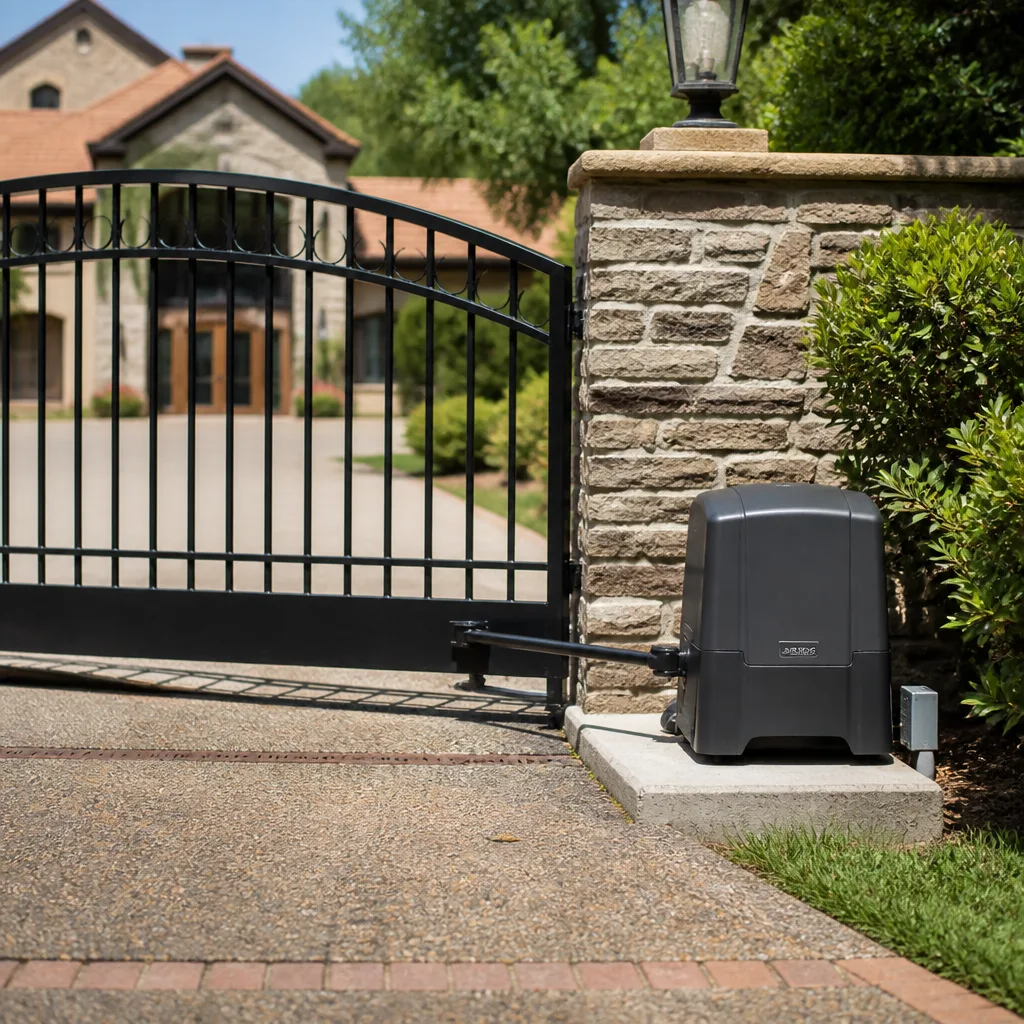
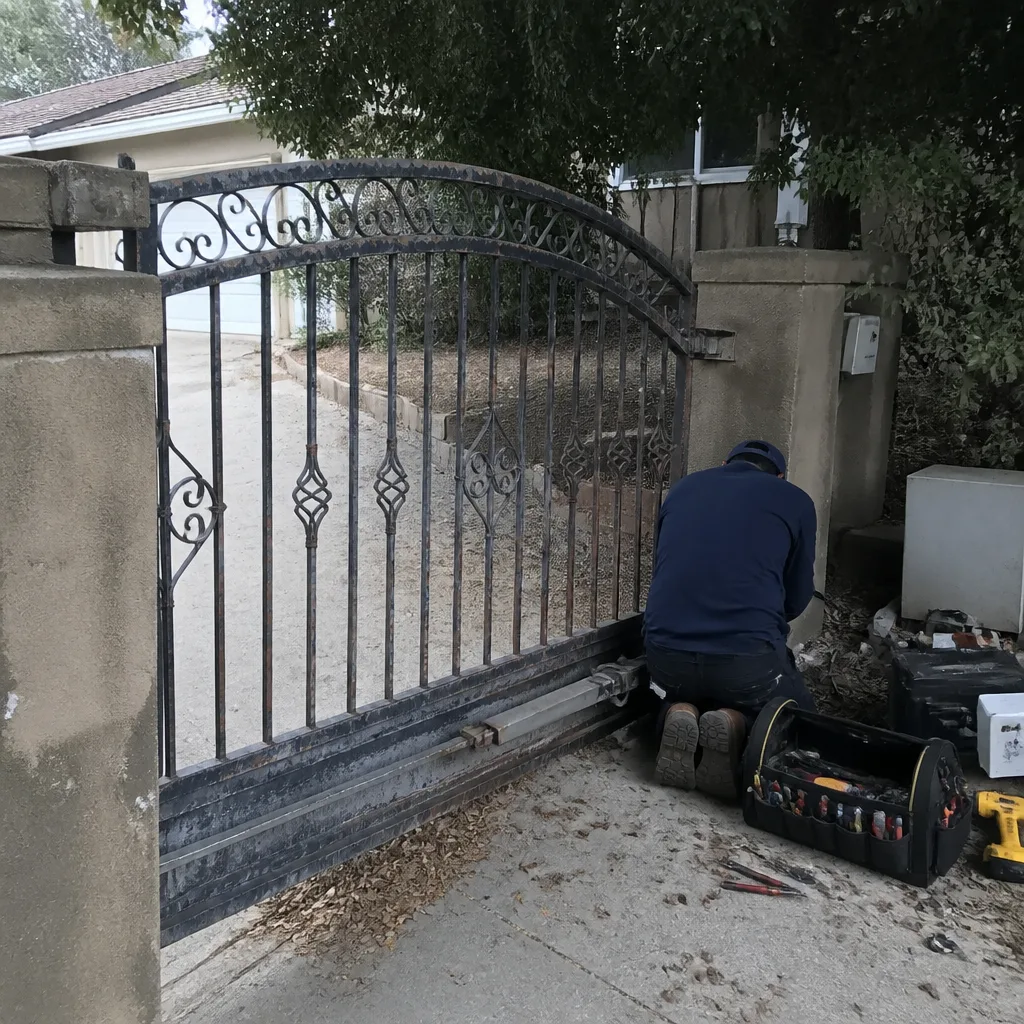 Before
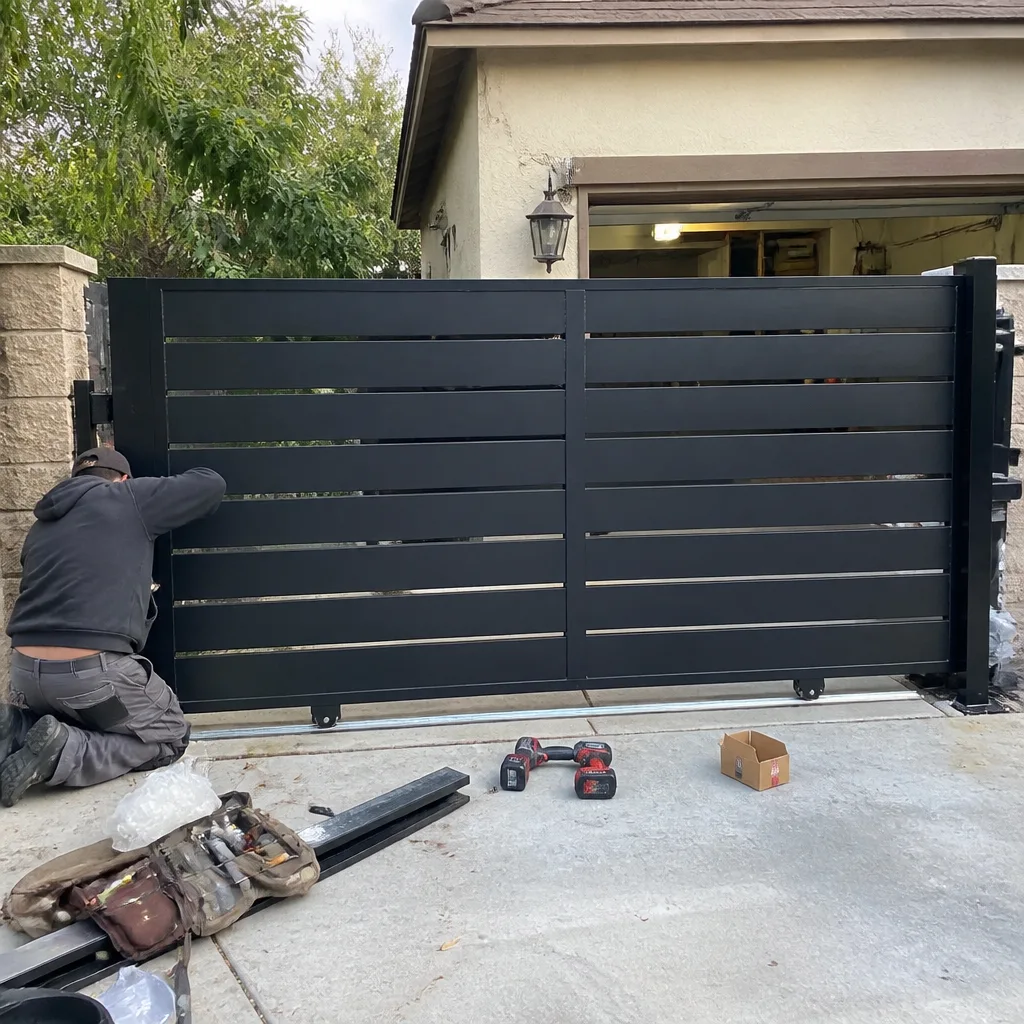 After
After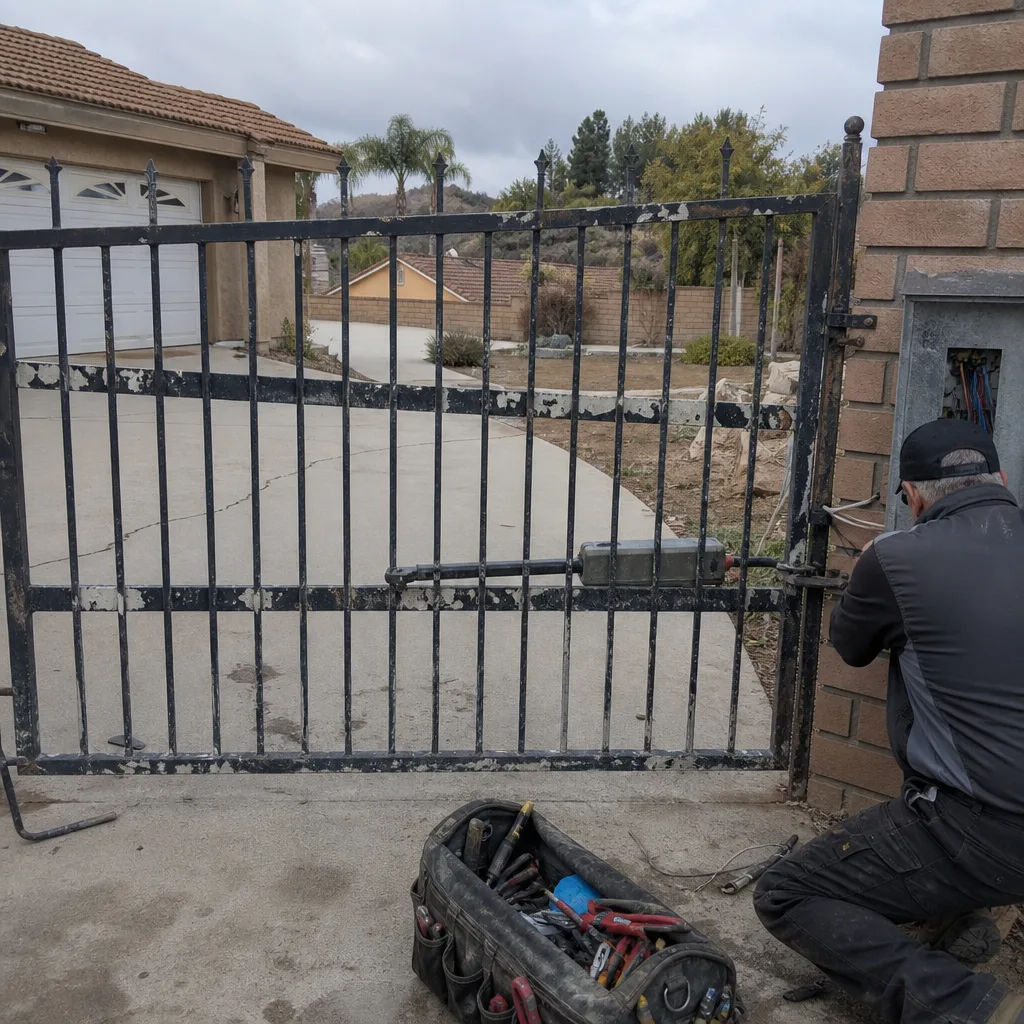 Before
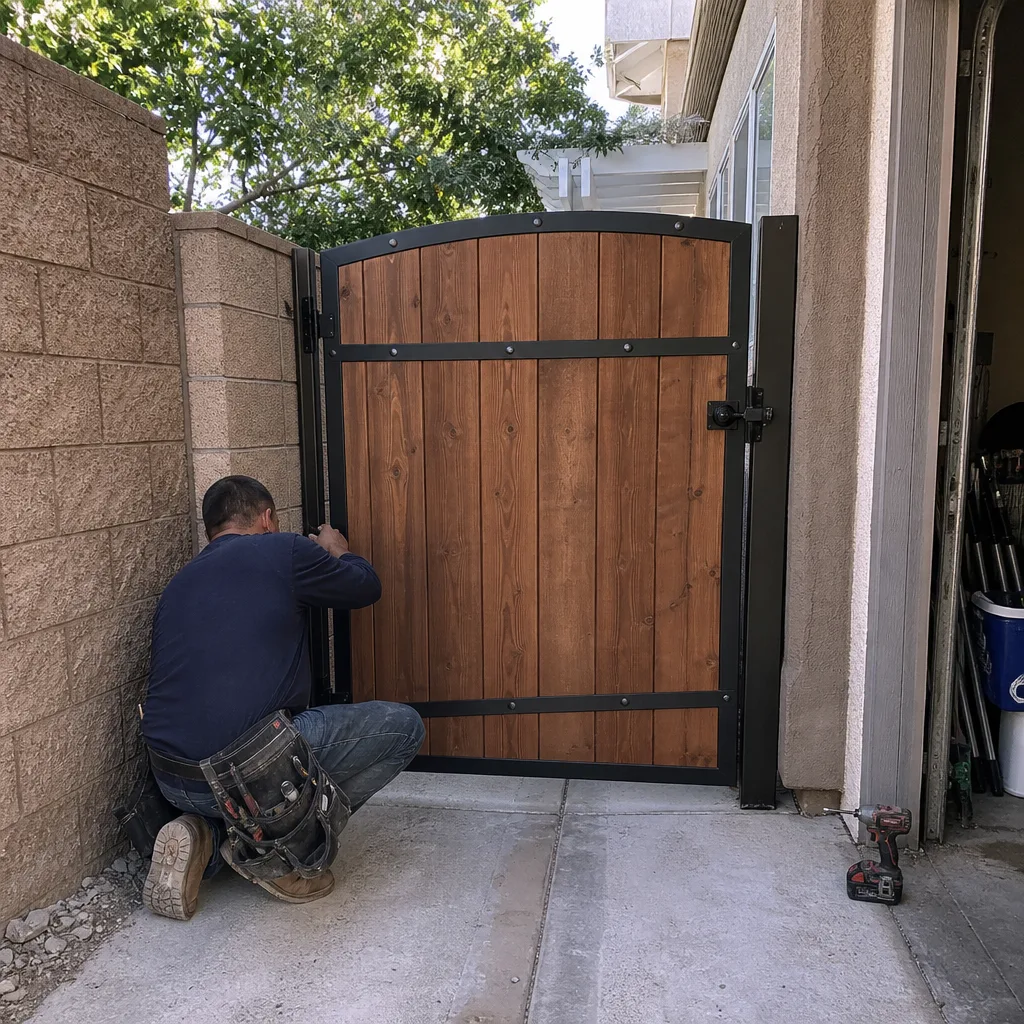 After
After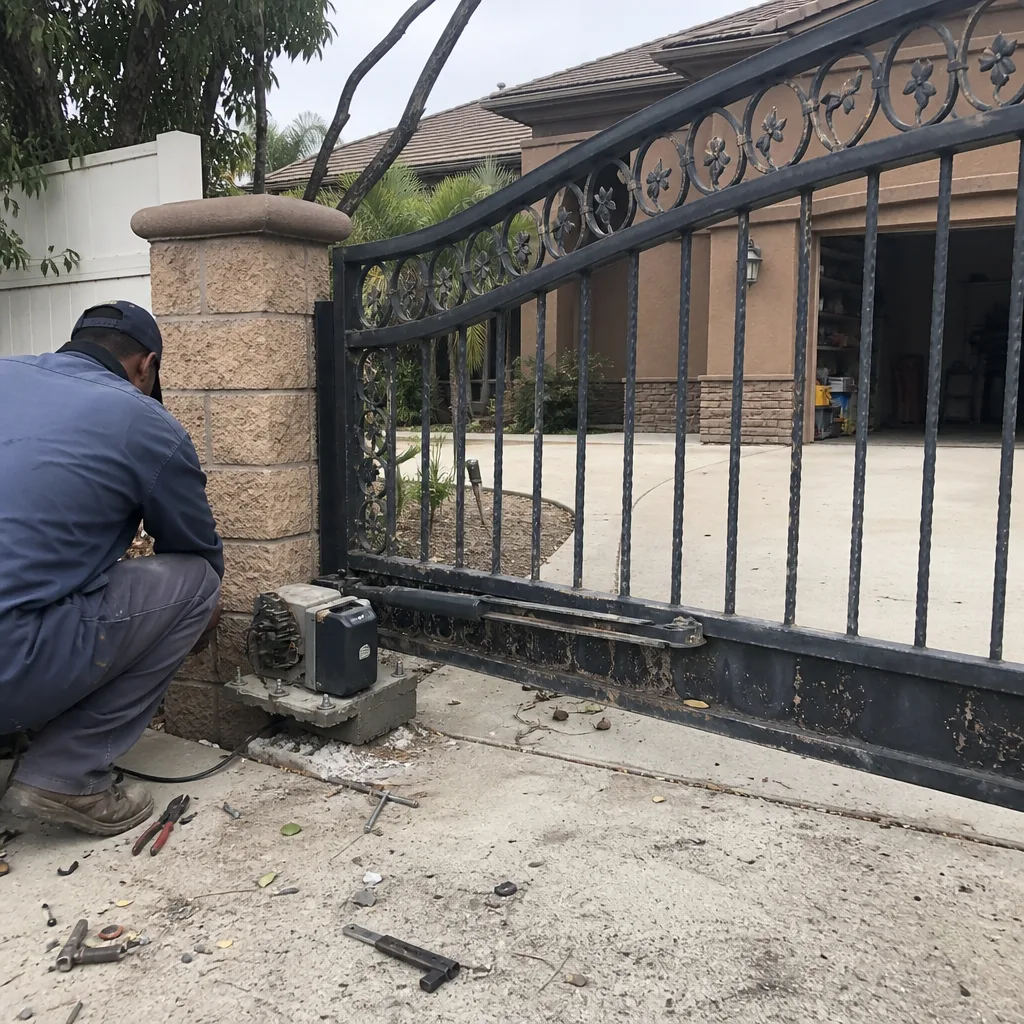 Before
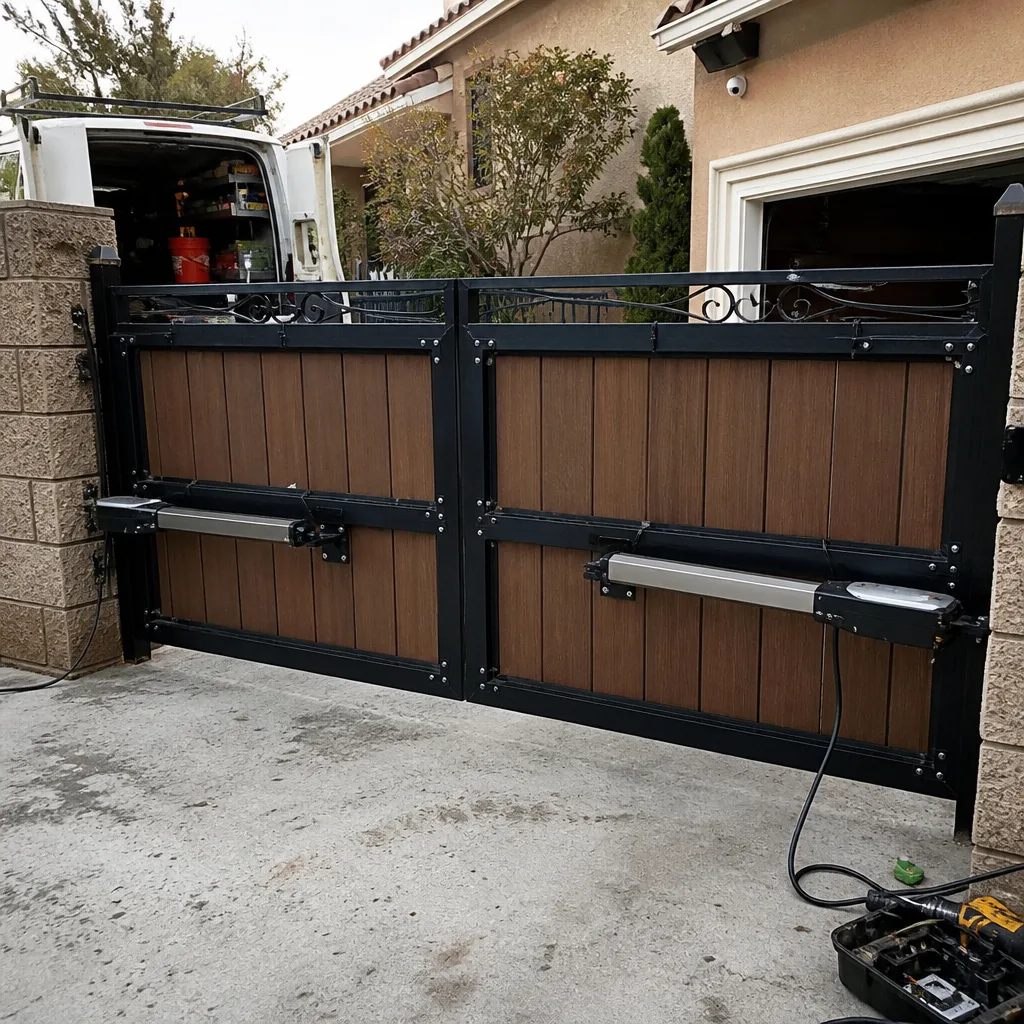 After
AfterThe Complete Guide to Gate Repair in Castaic
Most driveway gates in Castaic don’t fail suddenly. They fail slowly, over months, while the owner shrugs off the grinding noise or the gate that shudders halfway open. Then one Tuesday morning it won’t budge at all, and the car is trapped in the driveway. This guide covers what actually goes wrong with gates in this part of Santa Clarita Valley, what repairs cost, when a fix makes sense versus a full replacement, and how to keep a gate running for another decade or two. We’ve seen thousands of gate failures across Castaic, from the older ranch-style properties off Ridge Route Road to the newer developments near Castaic Lake, and most of them share the same handful of root causes.
Quick Answer
Gate repair in Castaic typically costs between $180 and $2,500 depending on whether the problem is mechanical (hinges, wheels, track) or electrical (opener motor, control board, sensors). Most mechanical repairs run $180 to $600, while automation repairs average $350 to $1,200. Repairs on a single gate usually take one visit and a few hours; full replacements run higher and take longer to schedule.
Table of Contents
- Common Gate Problems in Castaic
- Gate Repair Costs in Castaic
- Mechanical Repairs: Hinges, Wheels, Track, and Welds
- Automation Repairs: Motors, Control Boards, and Sensors
- Repair vs. Replacement: How to Decide
- DIY Gate Maintenance That Actually Helps
- Common Mistakes to Avoid
- When to Call a Professional
- Frequently Asked Questions
Common Gate Problems in Castaic
Certain gate problems show up everywhere, and others are particular to our climate. Castaic sits in a high-desert valley where summer temperatures routinely pass 100 degrees and winter nights drop near freezing. That temperature swing works on metal, plastic, and electronics in specific ways.
Here are the failures we see most often on Castaic gates:
- Gate drags or scrapes the ground: The gate is a heavy steel structure, and gravity never quits. Over time, hinges settle and the gate sags at the latch end. On the older properties near Castaic Lake where gates often span 14 to 20 feet, this sagging is routine.
- Opener motor runs but gate doesn’t move: This usually means a broken chain, stripped gear, or a detached drive arm. It may also mean the motor’s internal capacitor has died. The motor sounds alive; nothing transfers to the gate itself.
- Gate opens on its own or reverses mid-travel: This is typically a sensor issue. Photo eyes get dusty or misaligned in Castaic’s dry, windy conditions. Wind-blown tumbleweeds and leaves will trigger safety eyes and send a gate back open.
- Remote works sometimes, not others: Intermittent remote response is often an antenna problem or a worn receiver board. In other cases, the remote’s battery is weak, or the opener has drifted off its programmed frequency.
- Grinding, squealing, or clicking: These sounds nearly always mean mechanical wear. Squealing points to dry or failing rollers; grinding suggests metal-on-metal contact somewhere, often at the hinges or the chain.
- Gate closes then immediately reopens: Safety loop detectors buried in the driveway may be failing, or the close-force setting is too sensitive. In Castaic, the clay-heavy soil shifts with moisture, which can crack or break loop wires over time.
Most of these problems are routine and fixable, often in a single visit. The key is not letting them compound.
Gate Repair Costs in Castaic
Repair costs in Castaic are shaped by the same forces as the rest of Santa Clarita Valley: labor rates, the age of the gate, and the distance between the property and a shop that keeps parts in stock. The good news is that a clear price list exists for most common repairs, and a company that knows this trade should be able to spell out the cost before any work begins.
Here are honest price ranges for the work we do most often:
| Repair Type | Typical Cost in Castaic | Notes |
|---|---|---|
| Hinge replacement (pair) | $220 to $580 | Includes welding and realignment |
| Roller replacement | $180 to $420 | Cost rises with gate weight |
| Track repair or straightening | $250 to $700 | Bent track is a common wind-damage result |
| Opener motor replacement | $450 to $1,400 | Depends on brand and horsepower |
| Control board replacement | $350 to $900 | Boards for DoorKing and Elite are widely stocked |
| Sensor or photo eye replacement | $150 to $380 | Often includes re-alignment |
| Gate welding (wrought iron) | $120 to $450 | Per section, based on thickness |
| Full gate replacement | $2,800 to $15,000+ | Custom steel gates run higher |
These figures are not random numbers; they reflect the actual cost of parts and skilled labor in this zip code. A company quoting far below these ranges is usually cutting corners, often using thinner steel or skipping the balance adjustment that makes the opener last. We quote a fixed price before starting, and the quote does not change mid-job. That is the only way a gate job should be priced.
Mechanical Repairs: Hinges, Wheels, Track, and Welds
Before a gate is an electrical system, it is a structure. A few hundred pounds of steel sitting on hinges and rollers. The mechanical side fails first in most cases, and when it does, the opener pays the price. A motor asked to push a gate whose hinges have seized will burn out years early. That sequence is so predictable it is almost a law.
The most common mechanical repairs in Castaic:
Hinge Replacement and Gate Realignment
Hinges wear in two ways: the pin elongates its hole, and the weld that attaches the hinge to the post fatigues. When a gate sags, the top hinge is usually the one that failed. Fixing this properly means cutting off the old hinge, welding on a new one, and re-hanging the gate so it sits square in its track. A real repair includes rebalancing the gate, not just swapping the hardware. Done right, the gate will swing and slide without effort, which extends the life of the opener.
Roller and Track Service
Sliding gates ride on steel rollers in a track at the base. Castaic’s dust and wind work grit into those rollers, and the grit cuts the steel like sandpaper. Rollers wear out, and when they fail, the gate drags. Track sections also bend, usually from impact or ground movement, and a bent track forces the gate to fight every inch of travel. Straightening or replacing track sections is common on older properties near the hills where the soil shifts seasonally.
Welding Repairs
Wrought iron and steel gates crack, usually at the corners where vertical pickets meet the horizontal rails. A cracked weld is not a cosmetic issue; it is a structural one. The gate is essentially broken and will continue to break until the crack is welded and reinforced. Proper welding means grinding the area clean, applying a full-penetration weld, and repainting. This is a common repair on the custom gates that were common in Castaic homes built in the 1980s and 1990s.
Automation Repairs: Motors, Control Boards, and Sensors
The opener is the part most people think of as “the gate.” It is the motor that opens and closes the gate, plus a control board, safety sensors, a receiver for remotes, and often a keypad or intercom. When this side of the gate fails, the question becomes: fix the component, or replace the operator?
Opener Motor Failure
Motors die from overwork. When a gate is not balanced, the motor strains harder every cycle. When it is balanced, the motor barely works at all. We see motors in Castaic that fail in five years on unbalanced gates, and motors that run twenty years on gates that were hung properly. Replacing a motor is often less expensive than rebuilding a failing one, and a correct replacement includes setting the open and close force so the motor does not fight the gate.
We service and install operators across nine major brands, including LiftMaster, FAAC, BFT, and Viking. That breadth matters because a technician who only knows one brand will often try to adapt the wrong part. The right motor goes in the right way, same day, without forcing a brand change the homeowner doesn’t need.
Control Board and Receiver Problems
Control boards fail from age, moisture, or power surges. In Castaic, summer thunderstorms and the occasional Santa Ana wind event can knock out power and send surges through gate circuits. A dead board will often still power the motor, but the gate will not respond to remotes or keypads. Replacing a board is a clean repair: pull the old board, seat the new one, and reprogram the remotes. For DoorKing and Elite systems, which are common on older Castaic estates, boards are readily available and can be installed the same day.
Safety Sensor and Photo Eye Issues
Government safety standards since 2016 require that gate operators stop and reverse when an object blocks the gate’s path. The photo eyes that make this work are simple devices, but they are vulnerable to dust, misalignment, and broken wiring. If your gate reverses constantly, the first thing to check is whether the photo eyes are clean and pointed at each other. If they are, and the problem persists, the sensor or its wire may need replacement.
Repair vs. Replacement: How to Decide
Not every gate is worth saving. The decision comes down to three factors: the condition of the gate’s structure, the age of the opener, and what the homeowner actually wants from the gate.
When repair makes sense:
- The gate itself is structurally sound: no significant rust-through, no broken welds beyond a single hinge, no sag that has pulled the frame out of square.
- The opener is under ten years old and was a quality brand to begin with.
- The problem is isolated: one failed component, one roller, one sensor.
- The homeowner is happy with the gate’s look and size.
When replacement is smarter:
- The gate is rusted through in multiple places, or it has cracked at more than one weld point.
- The opener is fifteen or more years old, and parts are discontinued.
- The gate has been poorly repaired before, and each repair is chasing the last one.
- The homeowner wants a larger opening, a different style, or an access-control upgrade like a keypad or intercom.
A full replacement involves detailed measuring, fabricating or ordering the gate, and installing it with new hardware. That is measured work, not a same-day job. What you should expect is a free on-site measure and a written price, with a clear schedule for fabrication and installation.
DIY Gate Maintenance That Actually Helps
There is a short list of maintenance tasks a homeowner can do safely. Everything on this list is simple, low-risk, and genuinely useful. Anything beyond this list involves springs under tension, electrical wiring, or heavy steel, and that kind of work should go to a trained technician.
- Keep the track clear: Use a leaf blower or a stiff brush to clear dead leaves, pine needles, and tumbleweed debris from the gate track every few weeks. Castaic winds push material into the track constantly, and that debris builds up quickly.
- Inspect the gate visually each month: Look for rust spots, cracks in the paint, or visible gaps where welds may be failing. Early rust can be sanded and repainted before it eats through the steel.
- Lubricate the hinge pins and rollers: A silicone-based lubricant works better than WD-40 in dust. Spray the hinge pins, the roller bearings, and the latch mechanism, then wipe away the excess. Do not lubricate the chain; most chains operate dry by design.
- Test the safety eyes: Place a box or a trash can in the gate’s path and close the gate. If it does not stop and reverse, the sensors need attention. This is a safety issue, not a convenience issue.
- Check the gate’s balance twice a year: Disengage the opener’s manual release and push the gate by hand. A properly balanced gate moves easily in both directions. If one person cannot move it without real effort, something is binding, and the opener is working harder than it should.
These five steps take less than an hour a year and will add real years to a gate’s life. The balance check in particular can reveal a small problem before it becomes a motor replacement.
Common Mistakes to Avoid
- Ignoring the grinding noise: A gate that grinds is telling you something. That sound is metal wearing against metal, and every week it goes unaddressed, the repair cost climbs. Replacing a worn roller early costs $180. Replacing a motor destroyed by the strain costs up to $1,400.
- Lubricating a chain with the wrong product: Heavy grease attracts dust, and Castaic has no shortage of dust. A greased chain becomes a paste-filled chain within a month, and that paste accelerates wear. Most chains are designed to run dry or with a very light dry-film lubricant.
- Forcing a gate open when the opener is engaged: If the gate won’t open, never push it hard while the motor is still connected. Disengage the manual release first. Forcing the gate strips gears and damages the drive mechanism. This single mistake turns a $200 sensor repair into a $1,000 gear replacement.
- Buying a replacement part without checking the voltage and dimensions: Not all gate parts are universal. A control board for one LiftMaster model will not run another. Measure, photograph the label, and buy with certainty. We see homeowners order the wrong board every month.
- Delaying a sagging hinge repair: A sagging gate strains everything: the hinges, the track, the rollers, and the opener. It also scrapes the driveway and wears a groove in the concrete. The hinge fix is quick and affordable; the cascade of damage is not.
- Painting over rust without treating it: A coat of paint over active rust looks fine for a season, but the rust continues underneath. The proper treatment is to grind the rust off, apply a rust-inhibiting primer, and then paint. Skipping the first step means repainting the same spot every year.
When to Call a Professional
Any repair involving a gate’s motor, control board, wiring, or high-tension spring should be handled by someone trained on that equipment. These systems carry live voltage, and a gate operator’s capacitor can hold a charge after the power is disconnected. The gate itself weighs hundreds of pounds, and a wrong move under a suspended gate can cause serious injury. If the problem is electrical, involve a professional.
We also recommend calling a professional when the gate has sagged enough to drag, when the gate reverses on its own, or when the opener has died entirely. These are not mysteries that require guesswork; they are diagnoses with known solutions. Ironworks Gate Co. offers free estimates in Castaic, and every repair is quoted and agreed before work begins. Call (350) 248-1180 to talk through what your gate is doing. A live person answers the phone at any hour.
Frequently Asked Questions
Gate repair in Castaic typically costs between $180 and $1,400 depending on whether the problem is mechanical or electrical. Hinge and roller work runs $180 to $600, while opener motors, control boards, and sensor repairs average $350 to $1,200. We quote every repair before starting work, and the price is fixed. For an exact figure, call (350) 248-1180 for a free estimate.
Most mechanical repairs, including hinge replacement, roller service, and welding, can be completed the same day a technician arrives. Many automation repairs, like control boards and sensor replacements for brands like DoorKing and LiftMaster, are also same-day if the part is in our truck or locally available. Call (350) 248-1180 and tell us the brand and what the gate is doing; we will tell you what is realistic before you commit to a visit.
We service and install nine gate-automation brands: LiftMaster, FAAC, BFT, Linear, Viking, Ghost Controls, DoorKing, Elite, and Mighty Mule. The advantage of that range is diagnostic certainty: the technician has seen your brand before and carries the right parts for it, not a universal adapter. Whatever opener sits in your driveway, the correct fix happens on the first visit.
It depends on the gate’s structural condition. If the steel is sound and the opener is under ten years old, repair is almost always the better financial choice. If the gate has rusted through in multiple places, or the opener’s parts are no longer made, replacement is smarter. A free on-site assessment settles the question. Call (350) 248-1180 to schedule one in Castaic.
Yes, a full gate installation includes the power run, safety edges, photo eyes, and any wiring to keypads or intercoms. This work is not an add-on; it is part of building a gate that meets current safety standards. Every new installation we do in Castaic is wired to the same code we would use on our own homes.
The 90-Day Done Right Promise is a written guarantee on every repair and installation Ironworks Gate Co. completes. If anything we touched is not right within 90 days, we come back and make it right, no paperwork, no argument. It has been the standard on every job for years, and it applies in Castaic and everywhere else we work.
The Bottom Line
A gate is a simple machine that fails in predictable ways. The gate itself is steel and hinges; the opener is a motor and a board. Most repairs in Castaic fall between $180 and $1,400, take a single visit, and are quoted before work starts. The fastest way to shorten a gate’s life is to ignore the small problems, and the fastest way to extend it is to service the gate early and keep the track clean. Done right, a properly hung and balanced gate will outlast the house it guards. Any gate question you have, we answer on the phone at (350) 248-1180, any hour, with no voicemail and no runaround. For more on our work in Castaic, start at the Ironworks Gate Co. home page.
Written by Victor Salinas, Owner at Ironworks Gate Co., serving Castaic since 2013.