
Last updated August 25, 2026
Free on-site gate assessment - hinges, posts, and your LiftMaster or Nice gate operator checked before anything is quoted
The assessment is free and the quote is the invoice.
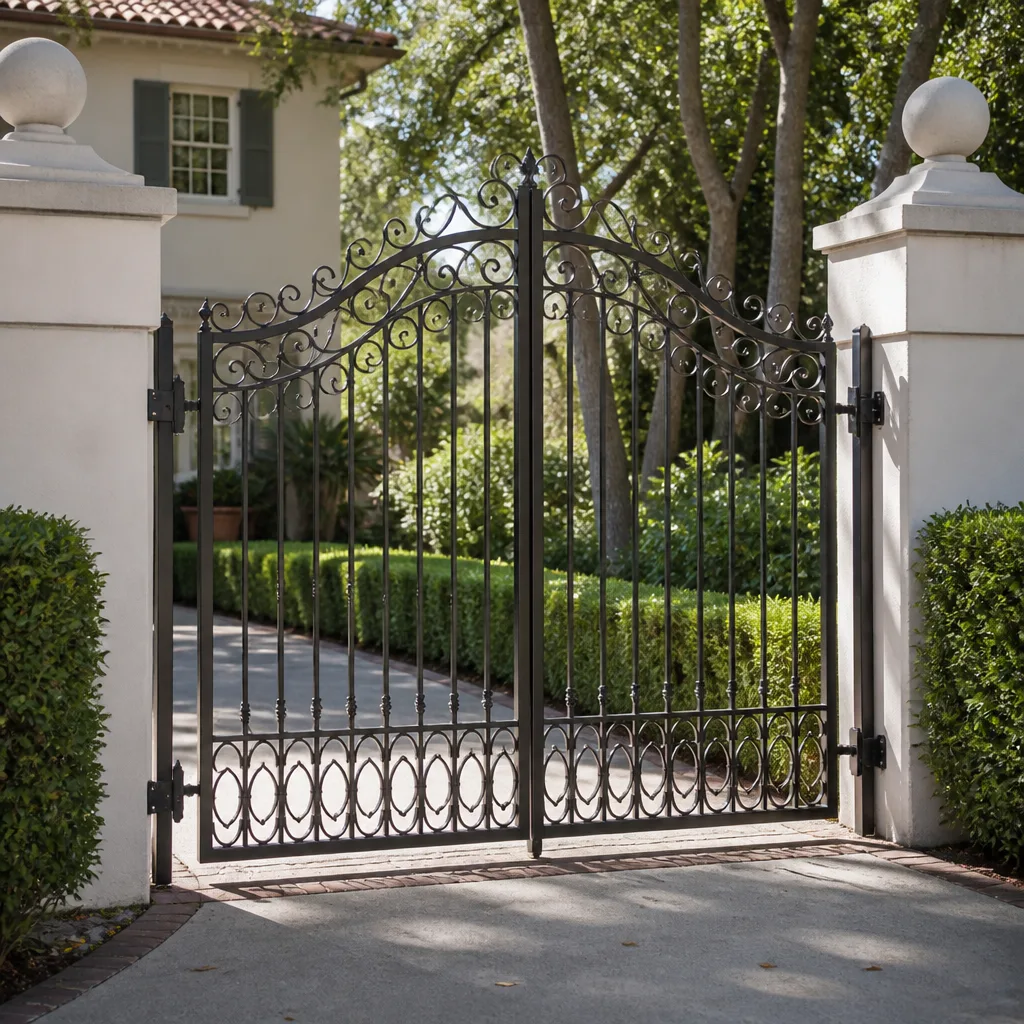
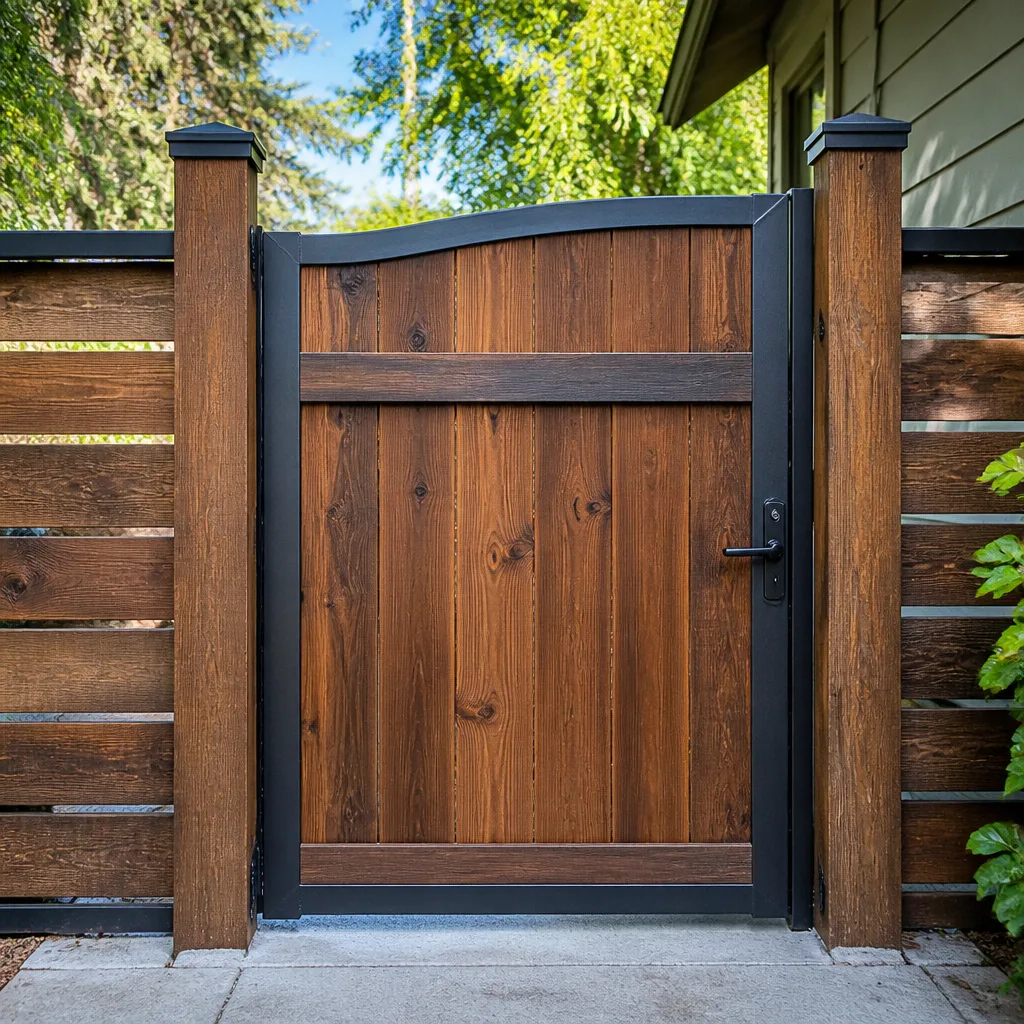
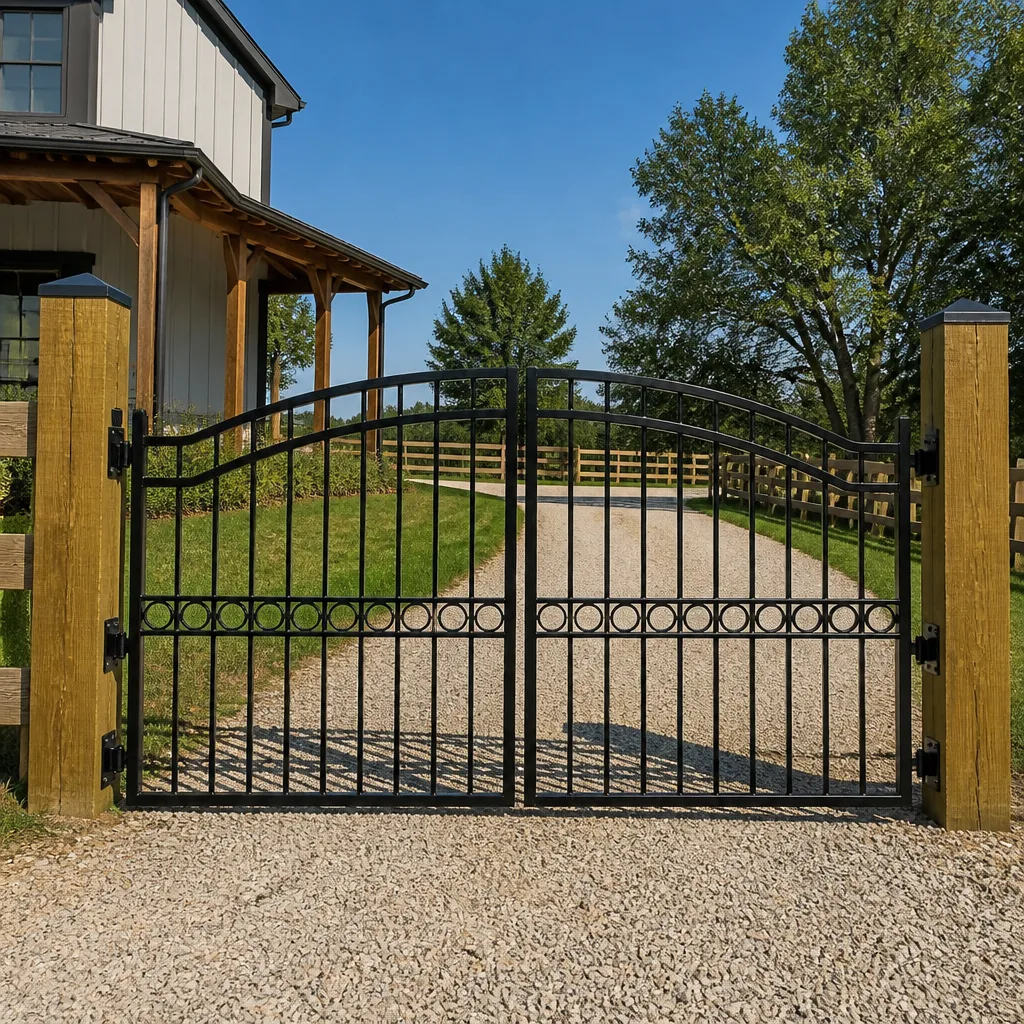
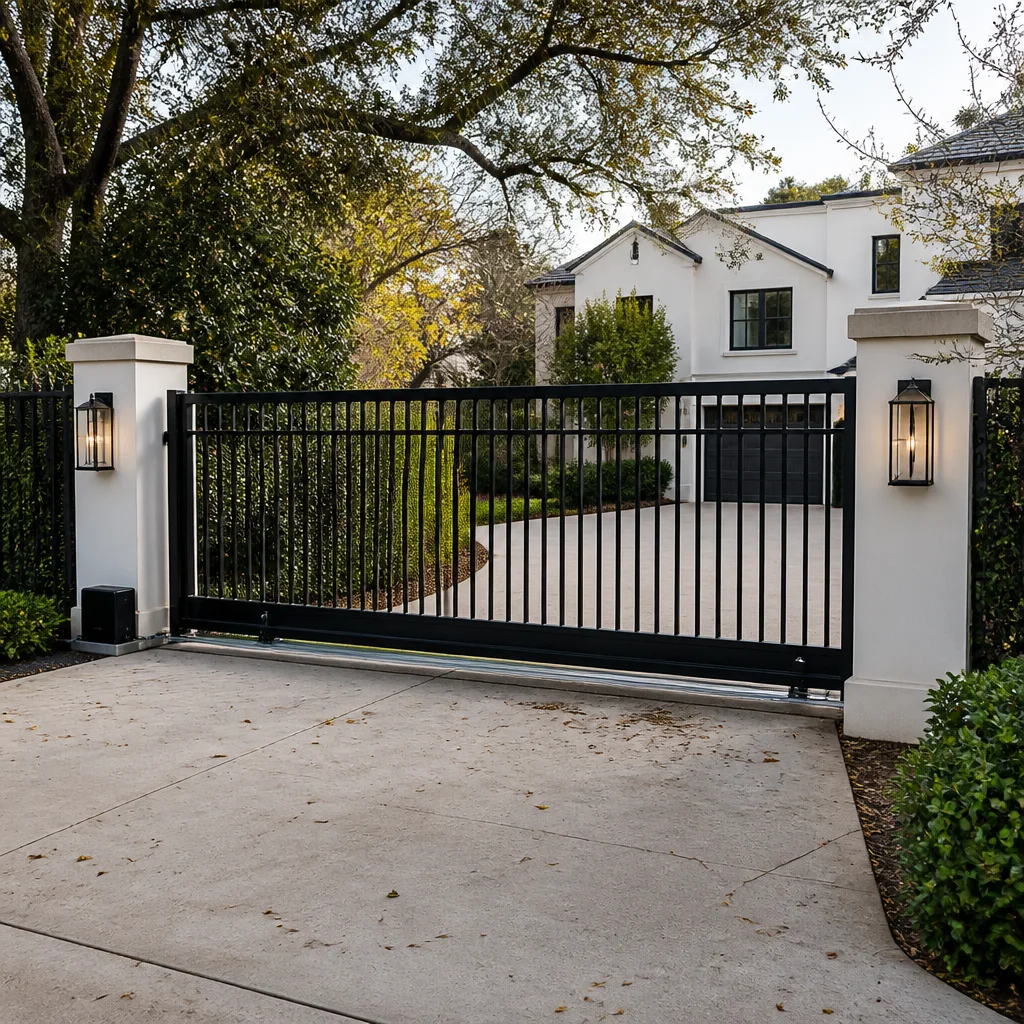
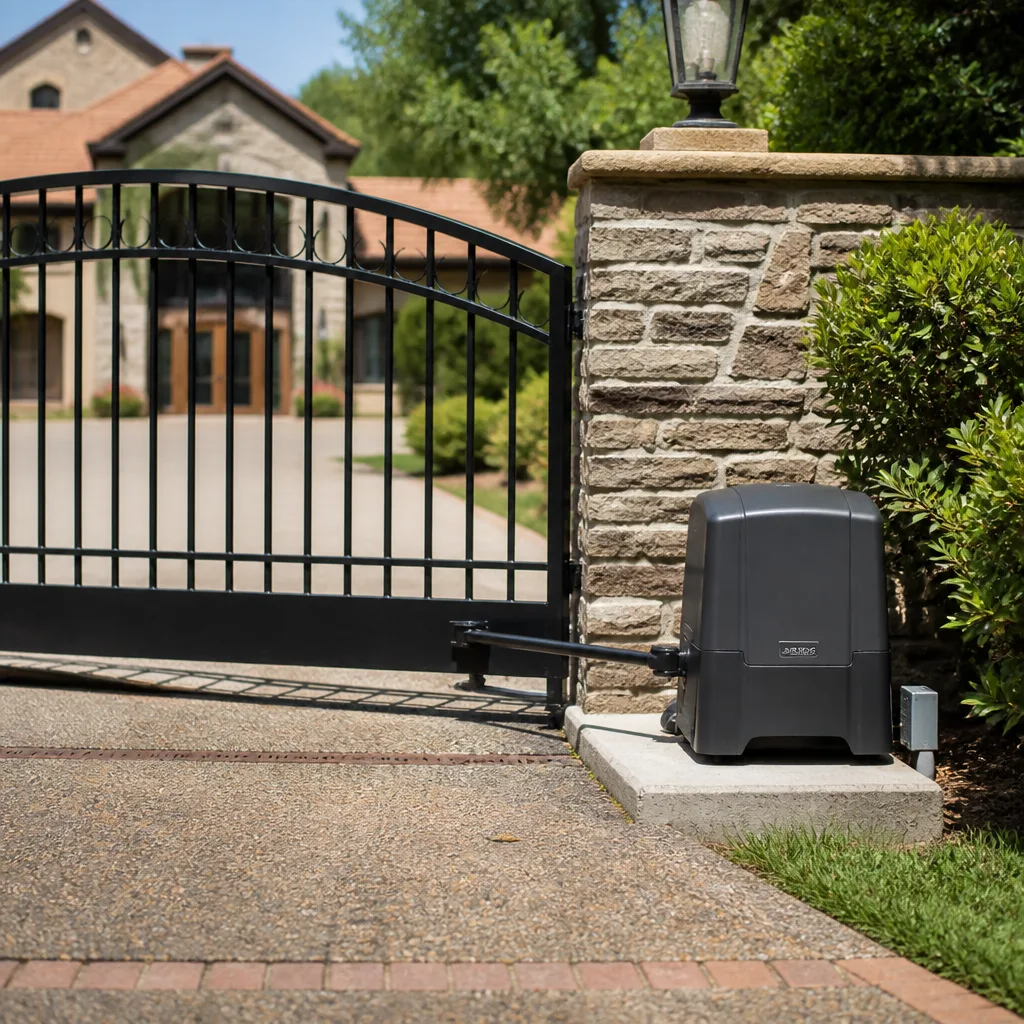
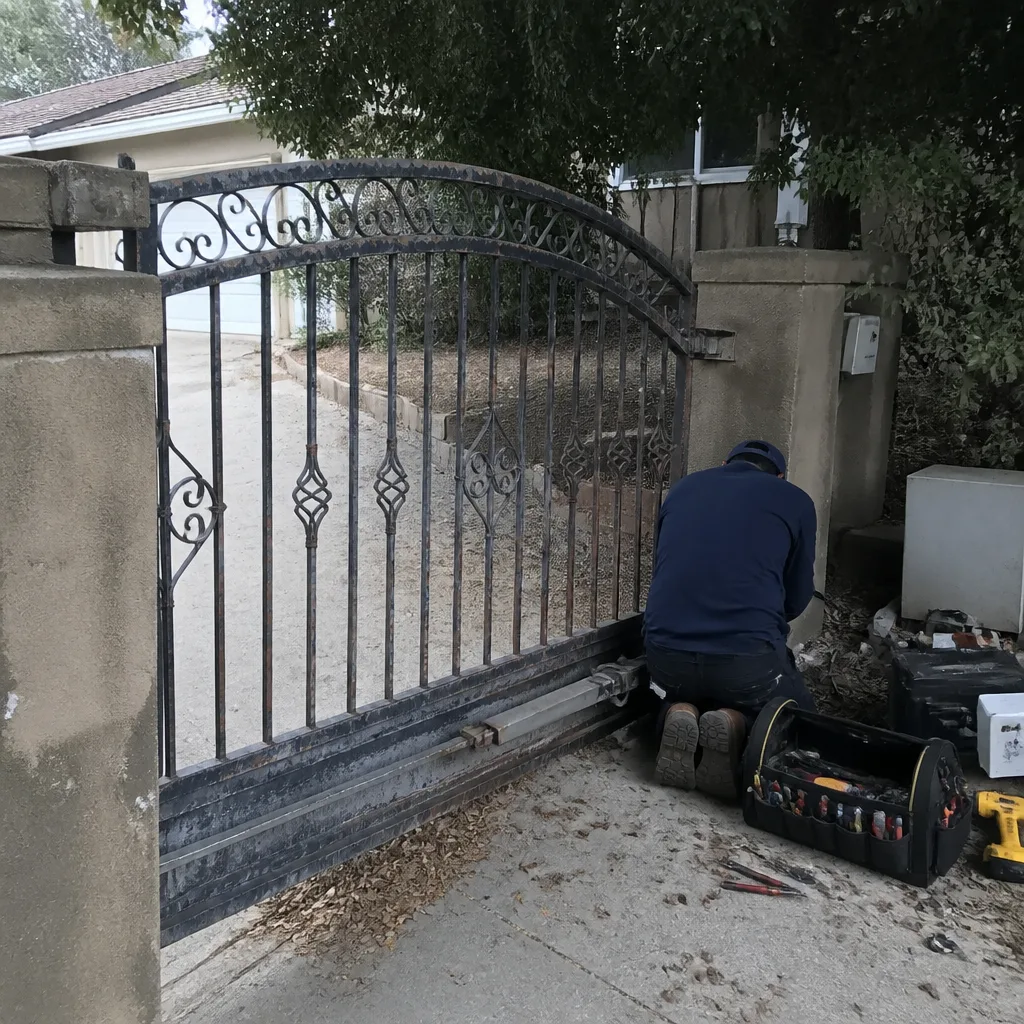 Before
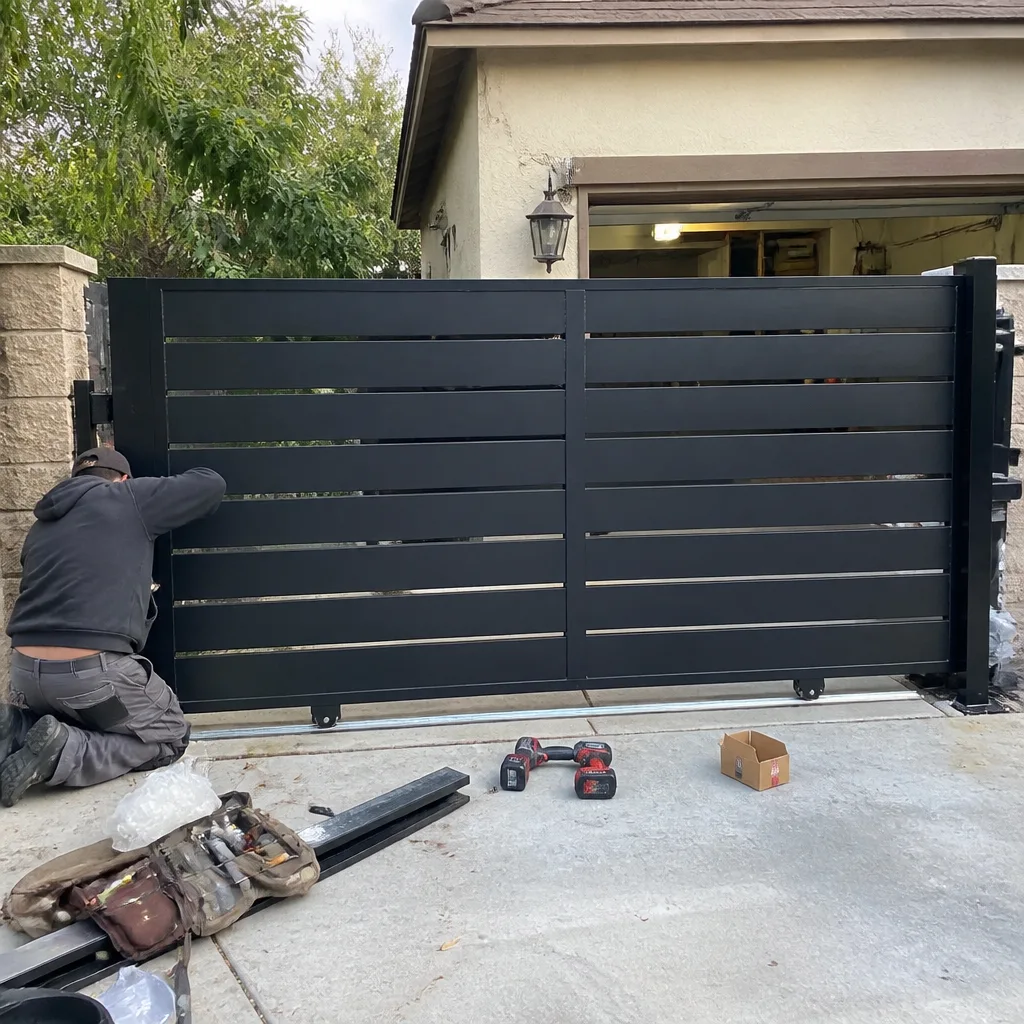 After
After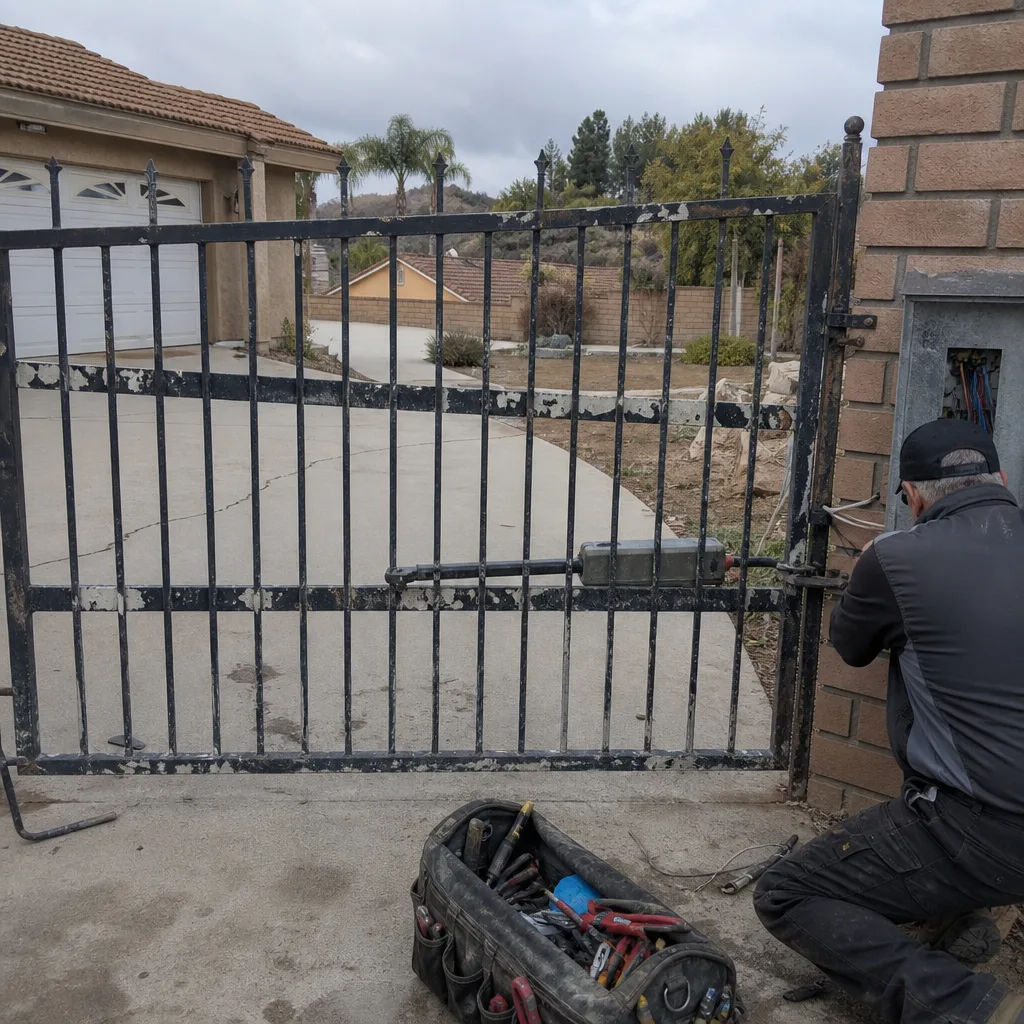 Before
 After
After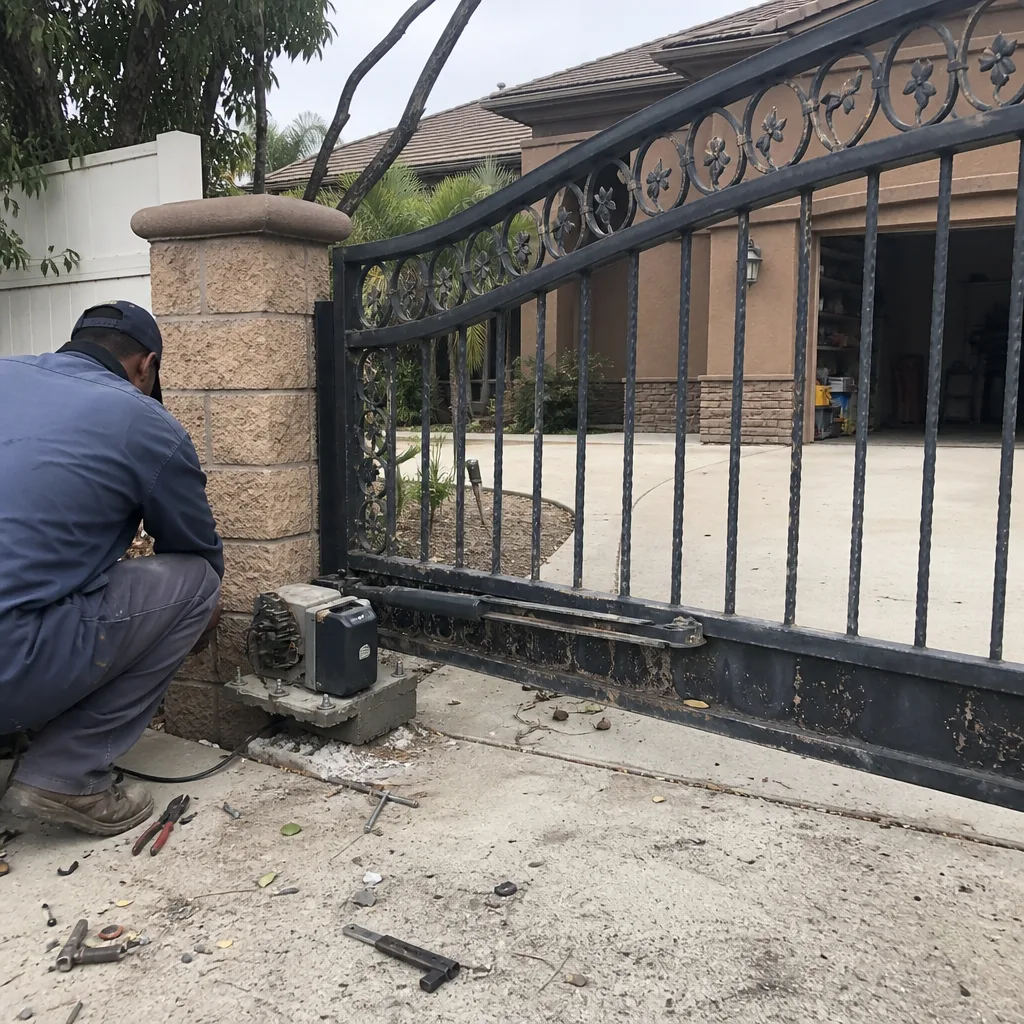 Before
 After
AfterGate Repair Warning Signs: A Castaic Homeowner’s Reference Guide
A driveway gate fails slowly before it fails completely. In fifteen years of working on Castaic properties, we’ve rarely seen a gate die without warning. The warning was always there: a groan at the hinge, a hesitation in the motor, a sag you could measure with the naked eye. Most homeowners simply don’t know what they’re looking at. This guide is written for the Castaic homeowner who wants to catch the problem while it’s still a repair, not a replacement. You’ll learn the seven warning signs we look for on every service call, what they mean, what they cost to fix, and when you’re better off calling a professional instead of investigating further yourself.
Quick Answer
The most common early warning signs of gate failure are: a gate that hesitates or stutters when opening, visible sag on the latch side, grinding or squealing from the motor, rust bleeding from the hinge welds, a keypad or remote that works intermittently, and a gate that slams shut instead of closing softly. If you notice any of these on your Castaic property, the fix is almost always cheaper this week than it will be next month. Most of the repairs behind these warnings fall between $185 and $420 when caught early.
Table of Contents
- A Gate That Sags: The Most Common Warning Sign in Castaic
- Motor Noise: When Your Opener Starts Talking Back
- Hesitation and Stuttering: The Opener That Can’t Commit
- Rust and Corrosion: What Castaic’s Climate Does to Gate Hardware
- Safety Edge Failures: The Warning You Can’t See
- Keypad and Remote Problems: When the Brains Go First
- Weld Cracks and Loose Hardware: The Slow Break
- Common Mistakes to Avoid
- When to Call a Professional
- Frequently Asked Questions
- The Bottom Line
A Gate That Sags: The Most Common Warning Sign in Castaic
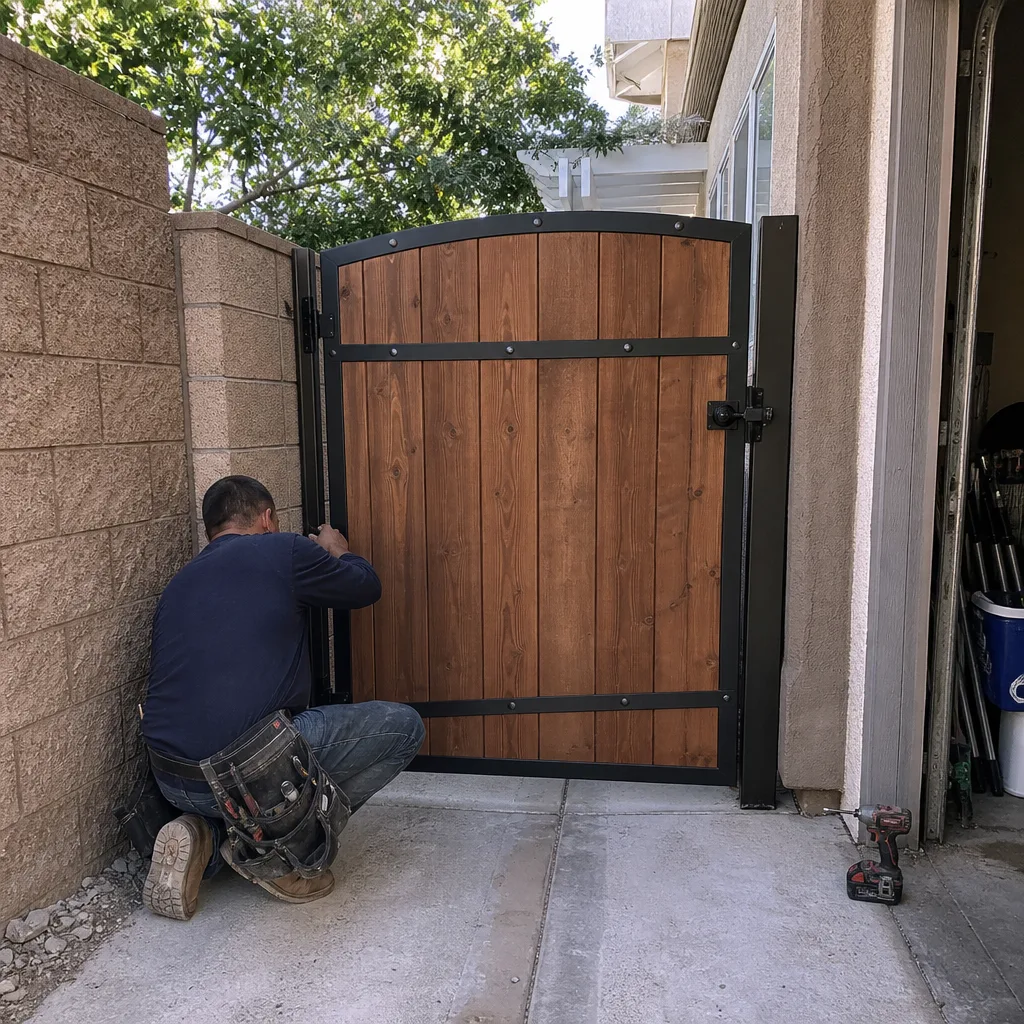
We get more calls about sagging gates in Castaic than any other single problem. The call usually starts the same way: the gate catches on the driveway, or the latch doesn’t line up anymore, or the whole thing just looks tired. A properly hung gate should sit level and swing through its full arc with no drag. When it doesn’t, something structural has shifted.
In Castaic specifically, the soil plays a bigger role than most homeowners realize. The Santa Clarita Valley has expansive clay soil in many areas. It swells when wet and contracts when dry. That movement translates directly into gate posts. A post set in concrete that shifts even half an inch will telegraph through the entire gate: hinges bind, the latch plate misses, the motor strains against a load it was never designed to carry.
Here’s what we look for when we assess a sagging gate:
- Post lean: Use a level against the hinge post. Any deviation from plumb is the root cause in roughly 70% of sag cases we see in Castaic.
- Hinge wear: Lift the gate slightly at the latch end. If you feel play at the hinge pin, the hinge is worn and allowing the gate to droop.
- Gate-to-post gap: Compare the gap at the top hinge and bottom hinge. Uneven spacing means the gate leaf has twisted or the post has moved.
- Ground clearance: A gate that was installed with 4 inches of clearance and now drags at 1 inch has sagged or the driveway has heaved.
The cost conversation is honest and straightforward. Re-hanging a sagging gate on existing posts typically runs $140 to $260. Replacing worn hinges adds $75 to $180 depending on the hardware. If the post itself has shifted, resetting a post in Castaic’s clay soil runs $400 to $800, because proper installation means digging deeper than the original, adding a concrete footer below the frost line and against the expansive soil, and sometimes using a steel post instead of wood. We quote this price before a single shovel goes in the ground, so there’s no surprise on the bill.
Motor Noise: When Your Opener Starts Talking Back
Gate motors don’t fail quietly. They whine, they grind, they clunk. The noise is the mechanism asking for help. A healthy opener produces a low, even hum. Anything above that, any change in pitch, any new clicking or grinding, is a warning sign that something inside the gear train, the drive belt, or the motor mount is deteriorating.
Castaic’s summer heat accelerates motor problems. July and August temperatures routinely push past 100 degrees. The motor housing sits in direct sun for hours. Thermal expansion and contraction, repeated daily for years, loosens internal components and degrades drive belts faster than in coastal climates. We see more openers die in August and September than in the rest of the year combined, and the failures almost always gave an audible warning first.
Here are the sounds and what they typically mean:
- A high-pitched whine that changes pitch as the gate moves: The drive belt or chain is loose and slipping. This is usually a $120 to $180 adjustment on most brands we service, including LiftMaster and DoorKing.
- A grinding sound from the gearbox: The internal gears are wearing or have lost lubrication. Continuing to run it will destroy the gearbox. Replacement runs $260 to $480 depending on the model.
- A metallic clunk when the gate starts or stops: Loose motor mount bolts or a worn coupler. The fix is often under $100 if caught before the mount cracks.
- A buzzing with no movement: The capacitor is failing or the motor is stuck. Don’t hold the open button and force it. Call us. A capacitor replacement is $60 to $120 on most openers.
One note from experience: the noise often shows up seasonally first. You’ll hear it on hot days and not on cool mornings. Homeowners dismiss it as “just the weather.” By the time the noise is constant, the repair bill has doubled. If your opener makes a sound it didn’t make last year, that’s the time to call.
Hesitation and Stuttering: The Opener That Can’t Commit
A gate that starts, stops, starts again, or pauses midway through its travel is telling you something specific: the electronics are struggling to read the position of the gate, or the motor is struggling against resistance. The distinction matters because the fixes are very different.
Electronic hesitation is common on older systems in Castaic’s temperature swings. Limit switches and hall-effect sensors drift out of calibration. The control board asks “where is the gate?” and gets a confused answer, so it pauses the motor while it figures it out. This is a simple recalibration on most openers we service, including Elite and Mighty Mule. It takes our technician about 20 minutes and typically costs $95 to $150.
Mechanical hesitation is different. That’s the motor working hard against a gate that doesn’t want to move. The cause is almost always physical: a dry hinge, a warped gate leaf, a wheel that seized on its track, or a post that shifted out of plumb. Forcing the opener to do this work will burn out the motor eventually. The motor is the most expensive component in the system, and the most preventable failure.
- Watch the gate during travel: Does the speed change at the same spot every time? That’s mechanical drag at that specific point.
- Listen to the motor: Does it strain and slow down, or does it click and restart? Strain is mechanical. Click-and-restart is electronic.
- Check the force settings: If you’re comfortable checking the opener’s force adjustment, letting it default to maximum temporarily will show you whether it’s fighting resistance. We don’t recommend leaving it there. Maximum force on a damaged gate is how gates break wrists and dent car doors.
In our experience with Castaic properties, hesitation that appears suddenly after a rainstorm is usually a water intrusion issue in a junction box or the keypad housing. Hesitation that builds gradually over months is a physical wear issue. Both are fixable. Neither gets better on its own.
Rust and Corrosion: What Castaic’s Climate Does to Gate Hardware
Castaic isn’t a coastal town. The rust we see here isn’t the salt-air corrosion of a beach house. It’s something slower and sneakier: a combination of high summer heat, surprise winter rains, and the alkaline clay soil that holds moisture against metal for weeks after the surface looks dry. That combination eats gate hardware from the bottom up.
We see three specific patterns in Castaic:
- Bottom-hinge rust: The lowest hinge sits closest to the soil and the irrigation overspray. It goes first, and when it goes, the whole gate sags.
- Weld-seam bleeding: Steel gates painted with any paint less than a professional powder coat will show rust first at the weld seams. The heat of welding changes the steel’s crystalline structure, making it slightly more reactive at the seam. A rusty line along a weld is not just cosmetic. It’s the steel losing thickness where the gate needs it most.
- Post-base rot: This is the one we hate to see. The post looks fine from 3 feet up, but at the concrete interface the steel has been sitting in water that pooled around the base. By the time you see flaking at ground level, the post wall may be paper-thin.
- The gate reverses without touching anything: This means the safety edge is sending a false signal. It thinks it’s touching an obstruction when it isn’t. This is the failure that gets ignored because the gate still “works.”
- The gate does not reverse when you press against the closing edge: This is the dangerous one. A proper safety edge should reverse the gate immediately when it contacts pressure. If yours doesn’t, the edge is dead.
- The photoelectric eye beam is misaligned: You can check this yourself. Look at the receiver while someone crosses the beam. The indicator light should change. If it doesn’t, the beam is out of alignment or the sender is dead.
- Intermittent reversal: The gate reverses sometimes, not others. That’s a failing edge sensor with a loose connection. In Castaic’s heat, wire connections expand and contract. Loose crimps eventually fail completely.
- Remote works close but not far: The receiver antenna is degrading, or the receiver sensitivity has drifted. On LiftMaster and DoorKing openers, this is often a $90 to $140 receiver repair or replacement.
- Keypad accepts the code but the gate doesn’t move: The keypad is working. The problem is between the keypad output and the opener input. That’s a wiring or relay issue, not a keypad issue.
- All remotes fail at once: This is almost never the remotes. It’s the receiver board in the opener. One component, not a fleet of dead clickers.
- Controls work in the morning but fail midday: Heat is expanding a micro-crack in a solder joint on the control board. This is a classic Castaic failure mode. The board works when cool and opens the circuit when hot. It will eventually fail permanently.
- Greasing the track instead of addressing the cause: A sliding gate that drags is usually compensating for a wheel problem or a post shift. Grease masks the symptoms for a few weeks and attracts Castaic dust and grit, which makes the wear worse.
- Replacing all the remotes when the receiver fails: We see this all the time. A homeowner buys three new remotes, programs them, and the problem persists. The remotes were never the problem. Test with one remote before replacing any.
- Adjusting the force settings to maximum and leaving it there: Maximum force on a dragging gate is how you dent car doors and injure pets. Force settings should always be the minimum that moves the gate reliably. If the gate needs more force, fix the mechanical problem.
- Ignoring a sag because “it’s been like that for years”: Every open-and-close cycle with a sagging gate accelerates hinge wear. The longer it sags, the more expensive the eventual repair.
- Painting over rust without treating it: Paint seals moisture under the surface, and the rust continues eating the steel out of sight. By the time it bubbles through the new paint, the section loss is often significant.
- Assuming a dead keypad means a dead opener: The opener and the keypad are separate components. If the gate opens with the button inside but not the keypad outside, the opener is fine. Replace the keypad, not the whole system.
- Waiting until the gate stops completely: Every warning sign in this guide is cheaper to repair than the failure it precedes. A $120 hinge replacement prevents a $600 motor burnout. Time is not on your side with gate problems.
The good news is that Castaic’s dry season gives you maintenance windows. We recommend inspecting your gate hardware twice a year: once in April before the heat hits, and once in October before the winter rains. Look at the hinge areas, the weld seams, and the base of every post. If you see rust starting, it’s a $40 to $120 repair to wire-brush, treat, and seal it. If you wait until the gate sags, it’s a structural job.
For homeowners who want to stop thinking about this entirely, we offer an $89 Seasonal Tune-Up that includes a full hardware inspection, lubrication, and touch-up treatment on any surface rust. It’s the cheapest insurance a Castaic gate owner can buy.
Safety Edge Failures: The Warning You Can’t See
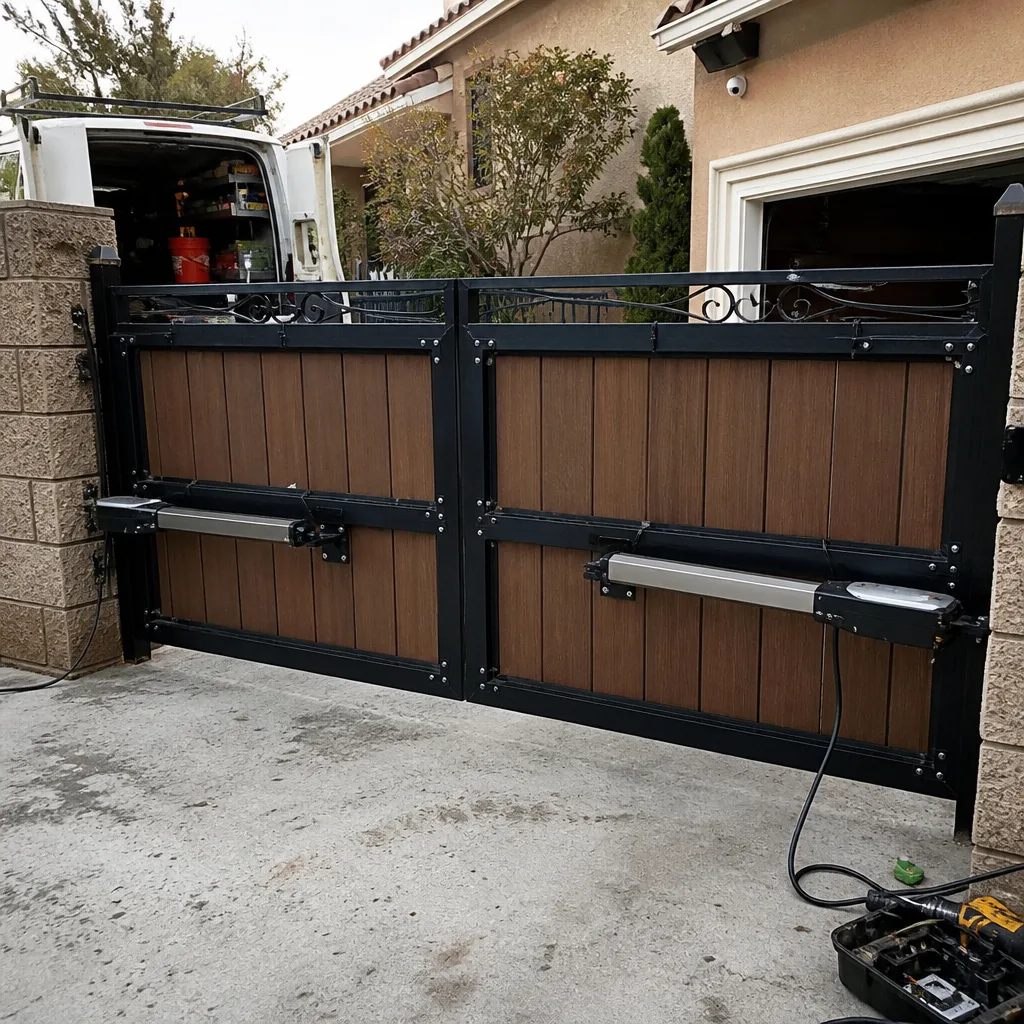
Every automatic gate installed in Castaic is required to have safety devices: photoelectric eyes, a safety edge, or both. These devices exist for one reason: to stop the gate when something is in the way. A child, a dog, a car bumper. When they fail, the gate becomes a heavy moving wall that doesn’t know when to stop.
The unsettling thing about safety edge failures is that the gate still works. It opens. It closes. It just doesn’t stop when it should. The warning signs are subtle:
We’ll be direct here: a gate moving under power with no functioning safety edge is a serious hazard. This is not a job we recommend for a weekend handyman with a multimeter. The electronics on modern safety edges are low-voltage and sensitive. A bad connection can pass a visual inspection and still fail under load. This is a repair we complete same-day in most Castaic neighborhoods, and it’s one we’ll never defer. If your gate doesn’t reverse on contact, call before someone gets hurt.
Keypad and Remote Problems: When the Brains Go First
The radio receiver, the keypad, the intercom, the phone app: these are the components homeowners interact with most and understand least. The mechanical parts of a gate can run for 30 years. The electronics behind the controls typically last 8 to 12. In Castaic’s heat, where surface temperatures on a south-facing keypad can exceed 140 degrees in August, that lifespan can be shorter.
Control system failures follow a predictable pattern. They start intermittent. The remote works, then it doesn’t. The keypad accepts the code, then rejects it. The app connects, then drops. Homeowners replace batteries, re-enter codes, and reboot the system. Those things sometimes help temporarily. They never fix the underlying issue.
Here’s what the patterns tell us:
We service nine opener brands, including Elite, Mighty Mule, DoorKing, and LiftMaster. The advantage of working with a company that knows the full landscape is that we don’t have to guess. When your opener misbehaves, we know the common failure points for that specific model. Most control system repairs are completed in a single visit, with the price agreed before the work starts.
Weld Cracks and Loose Hardware: The Slow Break
A weld crack is the most serious warning sign on this list because it’s structural. The weld is what holds the gate’s frame together. When a weld cracks, the gate’s geometry is changing. Stress that was designed to distribute across the entire frame now concentrates on the remaining intact welds. They fail next. It’s a cascade.
Weld cracks appear first at the corners where the horizontal rails meet the vertical stiles. You’ll see a hairline fissure in the paint. The paint cracks because the steel underneath has moved. On decorative gates with scrollwork, the crack often hides behind an ornamental element. The tell is a section of the gate that flexes when you push on it. A properly welded gate is rigid. If any part of it moves independently, a weld has failed.
In Castaic specifically, we see weld failures accelerate after periods of heavy wind. The Santa Ana winds that sweep down through the valley in the fall push against the gate’s full face. A 12-foot gate catching a 40-mile-per-hour gust is a lot of leverage. Every cycle of wind load flexes the structure. Steel has a fatigue limit. Cycles add up.
The fix for a cracked weld is not a DIY project. Welding gate steel properly means the right filler material, the right heat, and the right technique for stress relief. A cold weld with a hobby machine can look fine and fail catastrophically six months later. This is craft work. We’ve been welding gates in Santa Clarita and Castaic for over four decades. A cracked weld repair typically runs $150 to $350 depending on the location and accessibility, and it’s done right, with the frame checked for square and the other welds inspected while we’re there.
Common Mistakes to Avoid
When to Call a Professional
Any warning sign on this list warrants a phone call, but some are more urgent than others. Call immediately if your gate doesn’t reverse when it contacts pressure, meaning the safety edge or photo eye has failed. Call immediately if you can see a crack in a weld or if a post has visibly moved. Call immediately if the motor buzzes but the gate doesn’t move, and don’t hold the button down hoping it’ll break free.
You can wait a few days on a keypad that acts up occasionally or a hinge that’s starting to show surface rust. But schedule the repair. These problems don’t age well. Ironworks Gate Co. offers free estimates in Castaic. Call (350) 248-1180 and a live person will answer, any time, day or night. We’ll tell you honestly what needs attention now and what can wait. No pressure. No surprises.
Frequently Asked Questions
Gate repair in Castaic typically runs between $185 and $420 for most common issues including hinge replacement, opener recalibration, and safety sensor repair. Structural repairs like post resets run $400 to $800. Weld repairs run $150 to $350. The price is quoted and agreed before any work starts, so there’s no surprise invoice when the job is done. For an exact quote, call us at (350) 248-1180. Estimates are free.
Yes, in most cases. We stock the common parts for all nine opener brands we service, so most repairs are completed in a single visit. If the part is unusual or model-specific, we’ll tell you the lead time before you decide anything. Call (350) 248-1180 and we’ll tell you what’s possible today.
A full installation includes the gate structure, hinges, post setting, the opener if you’re automating it, the safety devices required by California code, and programming for your remotes and keypad. We handle the power run and the safety edge installation as part of the job, so you’re not scheduling a second contractor. We quote the complete scope in writing before the work starts.
Yes. We don’t install an opener without the required safety edges and photo eyes. We won’t leave a gate operating without proper safety protections in place. The power run from the panel to the opener is part of our installation scope. One contractor, one price, one point of accountability.
We typically see 8 to 12 years of service from a quality opener in Castaic’s heat before the electronics or the gearbox needs major work. Regular maintenance extends that. An $89 seasonal tune-up catches the small problems before they become openers that need replacement. The mechanical structure of the gate, if properly maintained, can outlast two or three openers.
Yes. A live person answers our phone at (350) 248-1180 around the clock, including weekends and holidays. It’s not an answering service and it’s not a voicemail queue. When your gate is stuck half-open at 11pm, you’ll talk to a real person who can help you figure out what to do next. Call us any time.
The Bottom Line
A Castaic gate doesn’t fail without warning. It sags, it groans, it stutters, it rusts, it stops being safe. Every one of those warnings is a repair that costs less today than it will next month. The homeowners who get the longest life from their gates are the ones who act on the first warning sign, not the ones who wait for the gate to stop working. We’ve spent 42 years fixing gates the right way, and we back every job with a written 90-Day Done Right Promise. If it’s not right, we come back and make it right. Every time. On every job. That’s the deal.
Written by Victor Salinas, Owner at Ironworks Gate Co., serving Castaic since 2013.